A sports robot can now use camera feeds, sensors, and motion data to react to changing play instead of repeating one fixed move. That shift matters for training, judging, filming, and athlete safety, but it still depends on good data and careful limits.
- AI lets a robot track a moving ball or athlete.
- Motion models help it choose the next action.
- Human control remains necessary for safety and unusual events.
From fixed moves to changing play
Older sports machines often followed set paths. A ball launcher could send shots at chosen speeds, while a camera robot could follow a marked route. AI adds a software layer that reads what the sensors see and changes the next move.
The process starts with perception. Cameras may detect a ball, player, court line, or obstacle. A computer model turns those images into useful positions, then the robot's control system works out how to move its wheels, arm, or camera mount.
That loop has to run quickly. A tennis ball changes position in a fraction of a second, and a camera robot that reacts late loses the shot. The robot needs enough processing speed to read new sensor data, plan a move, and send commands before the scene changes again.
Training gets more varied
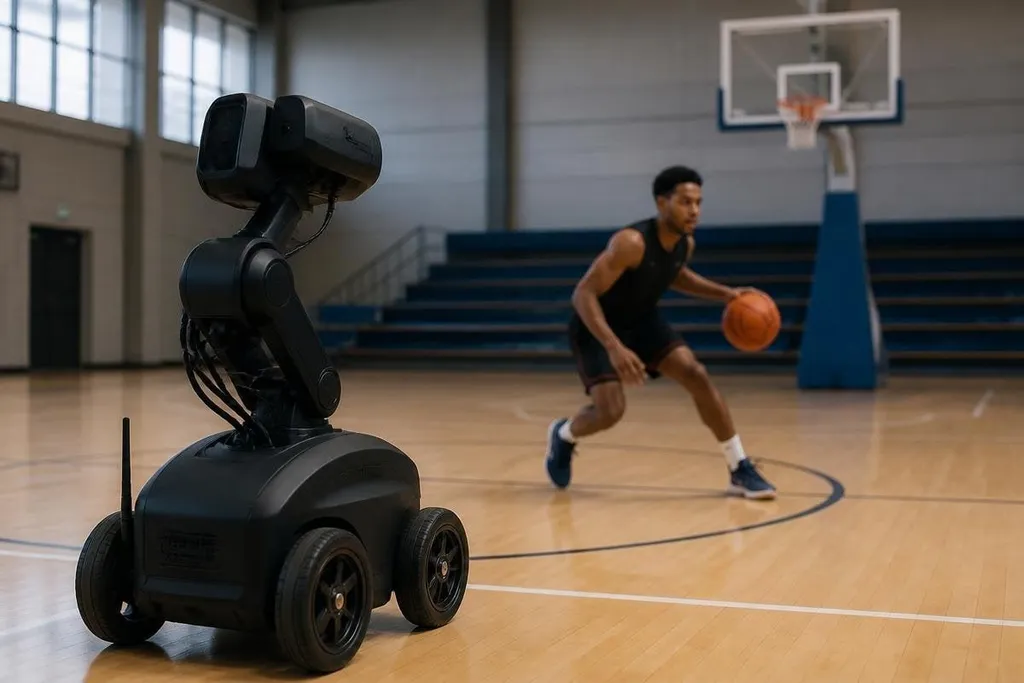
AI can change the task from a repeated drill into a set of changing drills. A training robot might adjust a pass, shot, or return after reading the athlete's position and recent response. The useful part is the change in timing and placement, not the label attached to the software.
This can give coaches more control over practice. They can set a speed range, a target area, or a response rule, then watch how the athlete handles each case. The machine still needs a clear task, suitable sensors, and a safe operating area.
A training robot’s score means little without the drill, date, and result beside it. Sports robotics reports from Robot24.com give coaches those details before they judge a clip or compare player responses.
Better filming and judging
Sports robots can also use AI to follow action for video. A camera system can track a player or ball, adjust its aim, and keep the subject in view as play moves across the field. That reduces the need for a camera operator to control every small movement.
The same tools can help with event records. Vision software may mark positions, count actions, or flag moments for later review. Those outputs still need checks because glare, blocked views, crowded scenes, and poor lighting can confuse a model.
Judging needs even more care. A missed detection can change a score or trigger a false call, so a sports body would need clear rules for review, correction, and human control. Speed alone doesn't make an automated decision fit for competition.
Where the limits remain
AI models learn from examples, and sports environments change often. A system trained on a clean indoor court may behave poorly in rain, dust, harsh sun, or a crowded venue. The robot also needs a way to stop when its view becomes uncertain.
Safety adds another limit. A moving arm, wheel, or launch system can hurt someone if its software makes a bad choice. Designers need physical barriers, speed limits, emergency stops, and tests that cover faults instead of only successful runs.
The data raises questions too. Video and movement records can reveal how an athlete trains, recovers, or performs under pressure.
Teams need rules for who can collect that data, who can see it, and how long it stays stored.
I'd be wary of any sports robot that claims to replace coaching before it proves safe work around people and steady results outside controlled tests.
A buying and trial checklist
Use this list before a club, team, or venue pays for an AI sports robot:
- Define the task: write down the move the robot must perform and the response it should produce.
- Check the sensor view: test bright light, low light, blocked views, and people crossing the work area.
- Set safe limits: record speed, stopping distance, restricted zones, and who can press the emergency stop.
- Ask about data: find out what gets stored, where it is kept, and who can access the recordings.
- Test failure cases: pause the network, move an object into the path, and remove the target from view.
- Measure useful results: compare training time, shot accuracy, video quality, or review time against the current method.
The next step for sports robots is not a larger claim. It is proof that an AI system can keep working when the court is wet, the view is blocked, or the play takes an unexpected turn.